
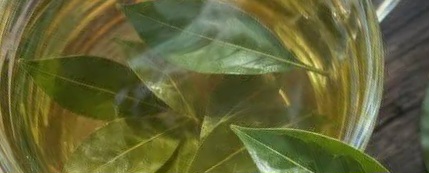
Bay leaves are a familiar kitchen ingredient, valued for their distinctive aroma and flavor in soups, stews, sauces, and other dishes. In recent years, bay leaf tea has also become popular in homemade wellness routines. Some social-media posts claim that drinking a tea made from a single leaf can destroy cancer cells or clear cancer from the organs within a few hours.
That claim should be treated with caution. There is no established evidence that bay leaf tea can eliminate cancer cells from a person’s organs in six hours or cure cancer. Laboratory findings involving plant compounds do not mean that drinking the plant as a tea produces the same effect in humans.
Still, bay leaves can be used to make a simple, aromatic herbal beverage that some people enjoy as part of their normal diet.
Simple Bay Leaf Tea
Ingredients
- 1 dried culinary bay leaf
- 1½ cups water
- Optional: a small amount of honey for flavor
- Optional: a slice of lemon
Step 1: Prepare the Leaf
Choose a bay leaf intended for culinary use and rinse it briefly under clean running water.
Do not use unidentified leaves collected from trees or plants, because plants with similar-looking leaves can be unsafe to consume.
Step 2: Heat the Water
Place approximately 1½ cups of water in a small saucepan and bring it to a gentle boil.
Step 3: Add the Bay Leaf
Add one culinary bay leaf to the hot water.
Reduce the heat and allow it to gently simmer for approximately 5–10 minutes.
Step 4: Strain
Remove the saucepan from the heat and carefully strain the liquid into a cup.
Remove the leaf completely before drinking.
Step 5: Add Flavor if Desired
If you prefer a sweeter drink, you can add a small amount of honey after the tea has cooled slightly.
A little lemon can also provide a fresh flavor.
What Does Bay Leaf Tea Actually Do?
Bay leaves contain various naturally occurring plant compounds, and bay leaf is commonly used as a culinary herb. However, evidence from laboratory experiments should not be confused with proof that bay leaf tea treats cancer in humans.
Cancer treatment depends on the specific type and stage of cancer and may involve surgery, chemotherapy, radiation therapy, targeted therapy, immunotherapy, hormone therapy, or combinations of these treatments.
A homemade herbal drink should never replace prescribed cancer treatment or be used to delay medical evaluation.
A Better Way to Think About Herbal Remedies
There is nothing wrong with enjoying a cup of bay leaf tea for its flavor as long as it is appropriate for you. The important distinction is between using an herb as a food or beverage and claiming that it can cure a serious disease.
If someone has unexplained weight loss, persistent pain, unusual bleeding, a new lump, prolonged changes in bowel or bladder habits, or another concerning symptom, the appropriate step is to seek medical evaluation rather than relying on an herbal remedy.
Enjoy.